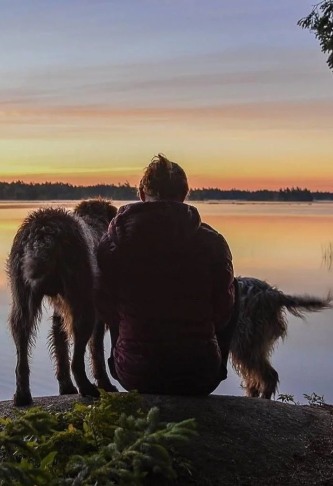
Best national parks for forest hiking.
7 BEST NATIONAL PARKS for Forest Hiking Worldwide
INTRODUCTION Written by Brian Alan Burhoe.
I grew up in the Northern Appalachian forests of New Brunswick. Those ancient rolling hills were filled with old trails. Narrow, twisty animal paths, wider foot trails and overgrown abandoned logging roads.
Lots of wildlife, even black bears. Rabbits, of course. Chipmunks, red squirrels, eastern coyotes and white-tailed deer. Down in the marshlands, smelling sweetly of spruce trees and moss, watch out for moose. Mixed birdsong and caws from above.
There was freedom in those forests. And a kind of spiritual peace. One that only forest hiking can give you. Many forest hikes have that wonderful halfway break: sitting on your own on the edge of a quiet lake. For a few moments that lake is your personal spiritual guide. Angel voices whisper over the water from the other shore.
Green Nature nurtures you. And teaches you Her ways. Her warm, loving ways. Her dark, witchy ways. Lessons we must learn, You and I. Before we go on that hike, here’s a story…
____________________
A Rabbit Appears
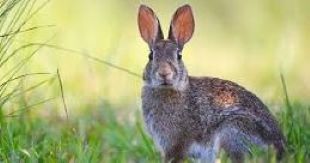
The early spring fields and meadows are empty. But greening. The clover is growing. That clover colours the fields purple and white.
Tentatively — a rabbit appears.
Followed by more cottontails.
They are few this year. But soon they will be living in the sweet clover and bouncing madly in the moonlight. And the rabbits get fat, some pregnant. A good year for bunnies.
Later, wolves appear. Not many wolves. Lean and hungry. They will soon have cubs, of course, but not many.
It’s Nature’s way. The rich green forest feeds those wild rabbits. And they have babies. The wolves feed themselves on rabbits. And they have healthy cubs. Balance.
Another year. And another. And the wolf pack thrives and grows bigger. In the fourth year the one pack splits into two.
Then, in Nature’s way, there are fewer rabbits. They’ve been caught by the many wolves. The woodlands seem to empty of prey. Seem to. And the grey predators begin to starve. They die under trees, in the shadowed places. The bright moonlight reveals no playing bunnies, no howling wolves. Winter takes its toll.
The early spring fields and meadows are empty. But greening.
____________________
“And into the forest I go, to lose my mind and find my soul” – John Muir.
Forest hiking offers you wonders. Most important — at least in the viewpoint of this ol’ Country Boy — the way of freedom from the enslaving, clamorous Machine.
The World is full of forest hiking trails.
Here are just Seven of the Best:
With expert help, we have selected seven great national parks on each continent. Which one attracts you most?
Africa
Tsitsikamma National Park, South Africa
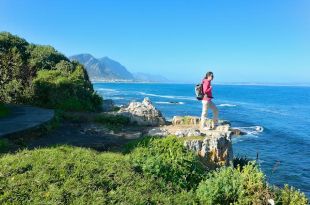
Territory: 80 km (50 miles) long stretch of ocean coastline. What to see: numerous forest species including Cape clawless otters, baboons, bushbuck, blue duiker, and rock hyraxes. Great for: forest hiking along the famous Otter Trail.
Otter Trail passes through dense gallery forest to the open, rocky sea shore.
Tsitsikamma National Park in South Africa is a “premier destination for eco-adventure.” It features the iconic Storms River Suspension Bridge, world-class hiking like the Otter Trail, and adrenaline-pumping activities such as the 216m Bloukrans Bungee jump. Visitors can explore the marine protected area via kayaking, snorkeling, or scuba diving, or enjoy forest canopy zipline tours.
The park is a haven for birdwatchers, with species such as the Knysna turaco (Lourie), African black oystercatcher, African fish eagle, Cape vulture, and various kingfishers.
The 5 km long marine protected area protects dolphins, Bryde’s whales, and southern right whales (seasonal). Cape fur seals, Pyjama sharks, and great white sharks also live in the coastal waters.
Asia
Shiretoko National Park (Hokkaido), Japan
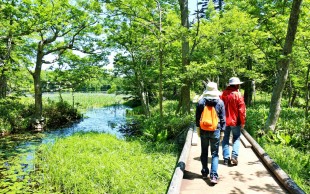
Territory: 386.33 km² (149 sq mi). What to see: renowned for its untamed wilderness. Great for: stunning views of the Shiretoko Mountain Range, the Sea of Okhotsk, and wildlife like brown bears.
Shiretoko, which originated from the Ainu word, “Shiri Etoku” which means “far corner of the earth” is exactly located at the northernmost tip of Japan. It’s a UNESCO World Heritage site with trails through virgin forests, such as the Five Lakes area and the Furepe-no-Taki falls hike. Popular hiking trails pass through a mix of primeval, cold-tolerant forests, dominated by Japanese white birch (Betula platyphylla), Sakhalin fir (Abies sachalinensis) and Japanese larch (Larix kaempferi).
Featuring stunning, wild forest hiking trails on Hokkaido, ranging from the accessible, elevated boardwalks of the Five Lakes (Goko) to demanding mountain treks like Mount Rausu.
Key trails feature primeval forests, scenic coastal views, and frequent wildlife sightings, including brown bears, making guided tours recommended. As well as one of the world’s highest densities of those bears, you can spot Ezo shika deer, Ezo red foxes, and rare birds like Steller’s sea eagles.
Europe
Rondane, Norway
Territory: 936 km² (372 sq mi). What to see: mountain peaks, reindeer, elk, waterfalls, lakes. Great for: hiking, water recreation, scenic driving, skiing
The national park is situated in Eastern Norway, next to the Gudbrabdsdalen valley. In the village of Høvringen, you can take one of the hiking routes, some of which are suitable for families (like Formokampen mountain). And walk through gorgeous mountain lodges.
The highest of the ten peaks, Rondslottet, reaches 2,178 metres. Its name translates as “the castle of Rondane.” While hiking, you can stay either in cabins scattered across the territory or at a mountain spa hotel.
Rich animal life is another gem of Rondane: here, you can come across one of the last wild reindeer herds remaining in Norway. There’s also an opportunity to meet a majestic Elk, called “King of the woods,” by joining a safari on electric bikes. Spectacular waterfalls are landmarks of the national park — take a look at Ulafossen and Brudesløret.
If you prefer peaceful recreation, stop at one of Rondane’s lakes with crystal-clear water. Rent a boat or a canoe, take a swim or take your chance with fishing. When deciding on a route, consider the famous Norwegian Scenic Route Rondane, which is said to be an unforgettable drive.
Stop at Sohlbergplassen viewpoint, There you can get an incredible view of the entire park. On your way, you can visit a baroque church, Sollia, the Aukrust Centre Museum, or Sjokoladelåven (the chocolate factory). In winter, Rondane National Park offers its visitors skiing and cross-country tours and trails for independent exploration. Such as the Troll Trail, connecting Høvringen and Lillehammer.
North America
1. Kejimkujik National Park and National Historic Site, Canada
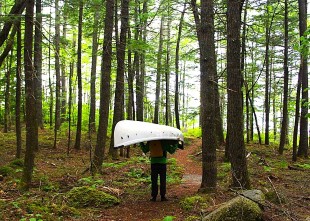
Territory: 404 km² (156 sq mi). What to see: Located in southwest Nova Scotia, it’s renowned as a Mi’kmaw cultural landscape. Great for: a premier destination for hiking, biking, paddling and camping.
The unique park (known locally as “Keji”) consists of two distinct areas: the large inland park already mentioned, and the Kejimkujik Seaside in Port Joli, on the North Atlantic coast. The Keji Seaside at 22 km² (8.5 sq mi) is about 1¼ hour drive from the main park. It features Harbour Rocks Trail, Port Joli Head Trail as well as a quiet sandy beach.
The inland Kejimkujik Park is the only heritage site in Canada that has the dual designation as both a national park and a national historic site for the entirety of its landscape. Designated in 1994, the national historic site is a Mi’kmaq Indigenous cultural landscape of forested upland plain located between Nova Scotia’s South Shore and Annapolis Valley regions.
Sacred Sites. It’s home to several Petroglyph sites, historical habitation sites, fishing, hunting and foraging territories, important historical travel routes (particularly canoe routes) and burial grounds dating back thousands of years.
Renowned for its large swaths of intact forest, Kejimkujik protects vast areas of historic French Acadian forest. Including both upland areas and forested wetlands. Most of the park’s forest is second growth, having been subjected to heavy logging and human-caused forest fires in the two centuries prior to the park’s establishment. Despite this, several areas of the park still host original old-growth forest.
The stands of original forest found in Kejimkujik represent some of the last remaining old growth forest in all of Eastern Canada. They’re one of the park’s greatest ecological attributes.
(NOTE: Although most of my hiking was along the wilder trails, I’ve reached the age where parks like Keji are a delight. I recommend Keji. It’s an exceptional way to experience the Northern Appalachian forests.)
2. Olympic National Park, United States
Territory: 3734 km² (1442 sq mi). What to see: Rocky Mountains, temperate rainforests and wild seacoasts. Great for: forest hiking, camping, beachcombing, storm watching and boating.
Olympic National Park, a UNESCO World Heritage Site in Washington State, is defined by its 3 distinct, intact ecosystems: glacier-capped mountains (including Mount Olympus), 73 miles of wild Pacific coastline with sea stacks and old-growth temperate rainforests. It features over 300 glaciers, 660+ miles of trails and diverse wildlife.
The Park features a diverse range of forest hiking trails, from the iconic moss-draped paths of the Hoh Rain Forest to the towering Douglas firs of the Staircase area.
Whether you are looking for short, family-friendly loops or challenging multi-day treks through old-growth wilderness, the park’s varied ecosystems offer exciting hikes through world-class forest scenery.
The Hoh and Quinault Rainforests are among the largest in the western hemisphere, characterized by high precipitation and lush, moss-covered old-growth trees (Sitka spruce, western red cedar).
South America
Torres del Paine, Chile
Territory: 2272,98 km² (87760,3 sq mi). What to see: mountains, lakes, waterfalls, glaciers. Great for: hiking, observation of wildlife, kayaking, horse riding, fishing, biking.
A Biosphere Reserve declared by UNESCO and the eighth World Wonder since 2013. Torres del Paine National Park is a magnet for tourists worldwide. In the territory, you find wonders that could have been collected from different places — icebergs, lakes, forests, pampas, and mountain massifs. Wildlife is also amazing, enabling visitors to see ñandúes, guanacos, pumas, plus 26 more mammal species.
The Trail to the Mirador Cuernos offers a short and easy hike surrounded by some of the stunning scenery of Chilean Patagonia.
The most popular times to visit are January and February, so avoid coming during these months if you aim to explore nature one-on-one. Torres del Paine offers a great number of picturesque vistas to observe the beauty of the surrounding lands.
For your comfort, there are plenty of checkpoints where you can rest and correct your route. If you decide to stay for a night, there are three hotels and three campgrounds in Torres del Paine.
Australia and New Zealand
Fiordland National Park, New Zealand
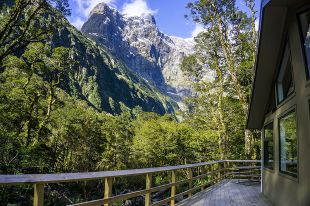
Territory: 12,600 km² (4864,9 sq mi). What to see: fiords, lakes, mountains, waterfalls. Great for: hiking, kayaking, boating, observation of nature and wildlife, water sports.
Fiordland National Park in New Zealand was heavily used for filming The Lord of the Rings trilogy. Known for its rugged, remote beauty, this region represented many iconic Middle-earth locations. These included the River Anduin (Waiau River), Fangorn Forest, the Dead Marshes, and the rugged mountains surrounding Rivendell.
Seeing the park’s landscape is like taking a journey 100,000 years into the past when Fiordland just appeared. Nowadays, it looks exactly the same: its hundred-metre waterfalls cascade into deep fiords, rainforests cling to mountains, and granite peaks surround transparent lakes. Fiordland is another World Heritage Site included in our list.
Milford Sound, one of the park’s territories, Milford Sound, was described as the eighth wonder of the world by author Rudyard Kipling. It’s recommended that you take a scenic flight over this place to fully understand the reason for such a title.
Eco-tours are popular in some fiords, in the course of which you have an opportunity to explore them by kayak. Fiordland is a superb spot for forest hiking: here, three of New Zealand’s best walks are located — Milford, Kepler, and Routeburn.
Milford Track, which is considered the best, is 53 km long and takes you through mountains, lakes and valleys, with the end at Sutherlands Falls, the tallest waterfall in New Zealand. Fiordland has an excellent infrastructure. It has 42 accommodations. It’s renowned for its recreation options. They include scenic flights, boat cruises, forest walking and hiking, observation of nature and wildlife, and various water sports.
Conclusion
Wherever you go, if you’re in a national park, you’re in a sacred space. A part of Nature rescued, protected, renewing, flourishing.
And Forests — they’re where Humankind came from. We evolved there — came from the trees. Following a woodland path is a kind of return to our ancestral wisdoms. Our ancient blood. Our ancient soul.
“Live Free, Mon Ami!” – Brian Alan Burhoe
7 BEST NATIONAL PARKS for Forest Hiking Worldwide
FURTHER READING:
- GOSSIP FROM THE FOREST: The Tangled Roots of Our Forests and Fairytales by Sara Maitland, Granta Books, London, 2012
- THE HIDDEN LIFE OF TREES: What They Feel, How They Communicate by Peter Wohlleben, Greystone Books, Vancouver, 2016
- THE WORLD’S BEST NATIONAL PARKS IN 500 WALKS by Mary Caperton Morton, Thunder Bay Press, San Diego, 2022.
SOURCES:
- “Kejimkujik is located in Southwest Nova Scotia. Paddle, hike, bike, camp, and connect with nature and Mi’kmaw culture…” Kejimkujik National Park and National Historic Site
- “If you wish to stay one-on-one with astonishing nature and experience beauty created without men’s participation, visiting a national park is your perfect option.” Open Access Article by Vsevolod Korokin КБ-01 Read More
- “The pre-Christian world was the world of Celts, who worshiped nature. To the Celtic outlook, the land was the great goddess. The rivers were her helpers and they enriched the earth. The Celts — like the Nordic and Germanic peoples — used to live in the Northern forests. Sacred forests where they were close to the Nature, learning the language of trees and wisdom of animals.” SEE – SACRED FOREST: Sacred Groves, Celtic Spirituality & Celtic Christianity.
For More, See BEAR ENCOUNTERS: Top 7 Places for Bear Watching in Canada
TAGS: Best national parks for forest hiking, forested hiking trails, woodland paths, nature hike, how to protect old growth forest.
DID YOU LIKE THIS BEST NATIONAL PARKS FOREST HIKING POST? IF SO, PLEASE TELL YOUR FRIENDS & FAMILY. SHARE THE NEWS!