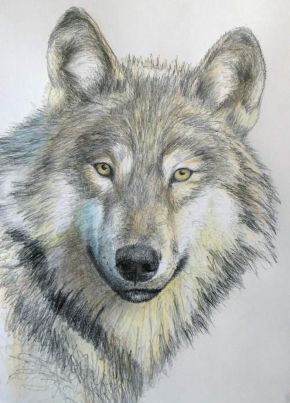
Native American wolf mythology.
Indigenous wolf stories and folklore.
NATIVE AMERICAN WOLF MYTHOLOGY: Northern Wolves, Ungava Huskies & HBC Trade Muskets
Posted by Brian Alan Burhoe
“The wolf is neither man’s competitor nor his enemy. He is a fellow creature with whom the earth must be shared.” Luther Standing Bear, Brulé Lakota writer & historian
Maheeshtan – What does Maheeshtan Mean?
Since putting my popular Northwestern short story WOLFBLOOD on this site, I’ve had a number of questions about the natural lives of wolves.
And the folkways and language of Johnny Akumi, including “What’s the meaning of Maheeshtan?”
In the language of Johnny’s Tikah nation, Maheeshtan (Mah-HEESH-tuhn) means “wolf.” Specifically a northern Gray Wolf.
Shossa: “She is faithful”
Wicewin: “Come with me”
Native American wolf mythology
In Indigenous First Nations and Inuit mythologies, the wolf is widely revered as a powerful teacher, skilled hunter, and family-oriented guide. Indigenous traditions generally viewed wolves with deep respect, associating them with loyalty, strong community bonds, and spiritual communication.
Unlike European folklore! European stories consistently cast the wolf as a villain. And Europeans carried that deep fear to the New World. Which resulted in a continent-wide wolf slaughter. [1]
First Nations Central Symbolic Meanings:
Family and Loyalty: Wolves mate for life, fiercely protect their pack. And care for their young and elders, mirroring ideal tribal community values.
The Hunter and Teacher: Many hunting nations viewed the wolf as a peer and mentor. Hunters would sometimes paint or carve wolf imagery onto canoes and gear for good luck and skill on the water.
Reincarnation: Several cultures believed that wolves were the spirits of deceased hunters or closely linked to human origins.
Regional Cultural Traditions:
Algonquian & Ojibwe Traditions: Stories feature figures like Ma’iingan (the wolf), who holds a sacred place in creation stories. In some Anishinaabe legends, the cultural hero Nanabozho had a wolf as a brother who later became the chief of the underworld or realm of the dead.
Pacific Northwest (e.g., Tlingit, Squamish, and Lil’wat): Wolves are seen as powerful daytime hunting guides and prominent clan crests. They are admired for immense physical strength and cleverness.
Inuit Traditions: Mythologies include distinct beings like the Adlet—creatures with a human upper body and a canine/wolf lower body—descended from a legendary woman and a giant dog.
Ungava Huskies:
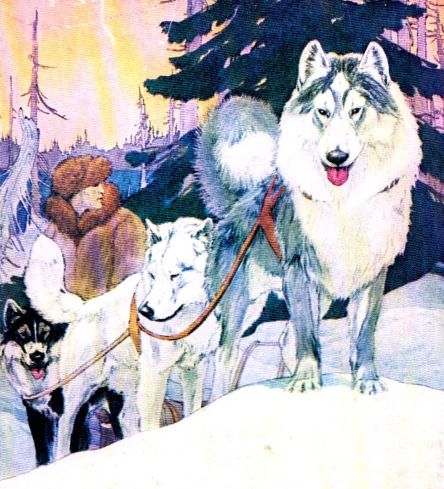
“Watch out for the dogs!” This was a once common warning to visitors up North. When European explorers and traders first came into the Canadian Northlands, the huskies belonging to the First Nations people were large and fierce and part wolf.
The Ungava District of Canada’s Northwest Territories is the last area where the wild wolf dogs were still raised as working sled dogs. They were written about by such popular authors as James Oliver Curwood, George Marsh and Walt Morey. American author and explorer George Marsh published short stories and novels about those fierce, loyal Ungava sled dogs. His most popular book was FLASH THE LEAD DOG.
“Flash quickly proved to the other dogs, both Slit-Ear and Kona, that he was their master. With the mighty Yellow-Eye, king-dog of the mail team, and master of the sled-dogs at Hungry House, it would be different. Someday in the spring, when the two Ungava huskies were loose and alone, they would fight it out.”
Then came the 1950’s and 60’s. With the arrival of mechanized snow transport, the Canadian federal and Quebec provincial governments ordered the mass killings of thousands of northern First Nations and Inuit “unnecessary sled dogs” by police. Inuit elder Harry Okpic has described how he had dreamed as a boy of owning his father’s dogs when he grew older. “But because of the Dog Slaughter, I didn’t get to do that. I saw the sky turn red.” Harry described the sound of police gunshots echoing in the hills. And of the lone wounded husky that escaped and hid under their house, seeking refuge with him and a friend. [2]
Except for the descendants of those rare Ungava huskies and surviving Arctic Inuit dogs, our modern huskies are the result of decades of interbreeding with smaller southern racing breeds, resulting in much smaller animals.
HBC Trade Musket:
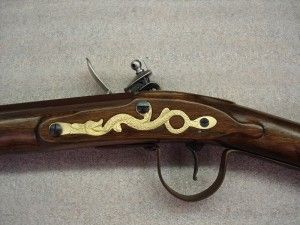
Known also as North West Guns, these trade guns were provided by the Hudson’s Bay Company to Northern trappers and hunters. From the 17th Century into the late 19th Century, and still used in the early 20th.
The HBC trade muskets were made in England by a number of gunmakers. These included J E Barnett & Sons of London and Isaac Hollis & Sons of Birmingham. At .58 or .62 calibre, the smoothbore muskets fired both shot (for small game) and roundball (for large animals). Making it a reliable, all-purpose long gun. They had extra-large trigger guards and easy trigger pull so they could be fired with mittened fingers.
These historic guns were distinctive for their stamped brass sideplates in the form of an uncoiling serpent. The serpent, based on the Algonquin mythic horned serpent Nambiza, was believed to bring good luck to the hunter.
“NE-KAH-NE-TAH”
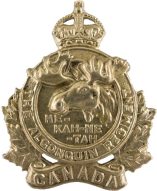 “We Lead – They Follow” A native Algonquin phrase, the motto of the Canadian Algonquin Regiment used on their regimental badge beneath the image of the head of a bull moose. The regiment included many native trappers and hunters from the North Country, expert riflemen.
The Algonquin Regiment proudly served in both World Wars, Korea, and with the Canadian Task Force in Afghanistan from 2002 to 2014. They lived up to their motto by often being sent into battle ahead of other Allied forces.
My father served with the Algonquins during WWII and was a part of the Liberation of Holland.
Have you heard the one about the Timber Wolf and the Sled Dog?
 IF SO, YOU MIGHT WANT TO READ WOLFBLOOD — MY MOST POPULAR ANIMAL YARN: “I LOVE THE HAPPY ENDING!”
“I JUST READ WOLFBLOOD AGAIN FOR GOOD MEASURE. ONE FOR ANY WOLF LOVER. ENJOYED IT BUT WISH IT WAS A FULL LENGTH NOVEL.” – Gina Chronowicz @ginachron
“GREAT SHORT STORY! DOES REMIND ME OF CALL OF THE WILD, WHITE FANG…” – Evelyn @evelyn_m_k
An “entertaining and affectionate” narrative in the Jack London Tradition of a lone Gray Wolf and his quest for a place in the far-flung forests of the feral North. ==> WOLFBLOOD: A Wild Wolf, A Half-Wild Husky & A Wily Old Trapper.
And See My Northern Post Cecil B DeMille, Call of the North & Tikah People – aka Tiger Indians.
“Live Free, Mon Ami!” – Brian Alan Burhoe
Tragedies, Dreams & Revivals
[1] “European stories consistently cast the wolf as a villain…” For more, see The Wolf Hunt – Wolfers in the Old West & Canada.
[2] Harry’s quote is from OKPIC’S DREAM, a stirring film documentary from Catbird Productions of Montreal, Quebec. “Harry Okpik dreamed of becoming a dog musher. But when government agents shot his and thousands of other Inuit huskies across the Canadian Arctic, 11-year-old Harry ‘saw the sky turn red’ and thought his dream forever destroyed…
 “Now, fifty years later, Harry Okpik reflects on the tragedy of the Dog Slaughter and the incident that led to the loss of his leg. Follow Harry through the Arctic seasons as he cares for his huskies and prepares for Ivakkak — a 600 km dog sled race across the Canadian Arctic. A race with the greater purpose: to bring back the nearly eradicated Inuit husky and a lost way of life.”
Update: OKPIC’S DREAM won the Grand Prix Rigoberta Menchu Award at the 25th First People’s Festival. An essential look at one man’s love of his dogs and the fierce, steadfast love these big northern animals give back to him that you’ve got to see. OKPIC’S DREAM – Catbirdproductions.ca.
“A wolf that has hunted food will take it back to the den to eat with the pack before it takes the first bite of food. So none is better than the other.” Hazel Dixon, Ojibway and Mohawk elder
TEXT SOURCE:
- “Wolves in folklore, religion and mythology: Wolves are important figures in a number of Native American cultures, with the wolf’s dedication to its pack, in particular, inspiring many of the beliefs and symbolism associated with them.” wikipedia.org.
- “The Native Wolf Symbol represents loyalty, strong family ties, good communication, education, understanding, and intelligence” spiritsofthewestcoast.com.
- “The relationship between Native Americans and wolves is considered sacred. Tribal bands believed that God roamed the earth in the form of wolves and anything that befell the resident wolfpack would affect the band too.” christineadelearts.com.
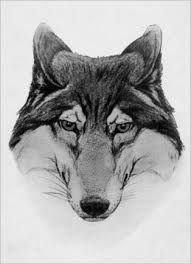
IMAGE SOURCE: Wolf Drawing Upper Left of Page is from DrawingSkill.com. Other artwork from Project Gutenberg; photos from our own Digital Album.
TAGS: Native American wolf mythology, Ungava huskies, HBC musket, HBC trade musket, Flash Lead Dog, George Marsh, Innuit husky, Northwest trade gun. Wolves in mythology. Wolf folklore. Canadian First Nations Wolf Myths, wolf mythical creatures.
Did You Like this Native American Wolf Mythology Post? Please Share it With your Friends! On Your Fave Social Media, Email or AI…